Sponsored Links


Play & Win : 4moles Golf Quiz Challenge. Win Rs. 3,000* every week

Weekly Tips Archive

 
Golf Myths & Simple Fixes


I’ve seen so many different approaches to golf instruction that some things have come full circle. For every instructor who says keep your head down, another says let it turn. For  More >>
Courtesy: Bobby Hinds
Learn How To Master The Sand Wedge

The most successful golfers are the most creative ones. (Consider how inventive Phil Mickelson is when his tee shots get him in trouble.) But creativity on the course comes in many different fo  More >>
Courtesy: Dale Abraham
Making Putts Over 25 Feet From The Hole  

For putts over 25 feet you want to work on some of Joe's pointers. Use these professional golfing instructions and visualize making that putt. You'll be sinking them from far away in no time!  More >>
Courtesy: Joe Beck
Develop And Repeat A Consistent Preshot Routine

Read about how you can tackle the situation where you tee off on a hole with a hazard or OB on either side of the fairway.

When the game’s best golfers get ready  More >>
Courtesy: John Stahlschmidt
Reading the Green
The overall contour of the green can be assessed from 50-100 yards out. It's a fact that a ball will roll away from mountains and towards the ocean; so if there is a hill near the green the ball will r  More >>
Courtesy: Tom Ward
The putterface & its dependence for short putts
The putterface is crucial to making short putts. You need to square your putterface. A problem many golfers have with short putts is not being able to keep the putterface square throughout the stro  More >>
Courtesy: 4moles.com
Cure the Slice, Watch the Face
The simple cause of slicing is an open clubface. The simple cure for slicing is to get the clubface square through the impact zone on a consistent basis. To accomplish this, you must learn to properly  More >>
Courtesy: Nick Kumpis
Putting - Expect the ball to drop
The most important thing is to expect the ball to go in the hole. That is where it belongs. Keeping your body still, create a clockwork rhythm in your putting action. If you keep it as simple as count  More >>
Courtesy: Eddie Lester
The Backswing
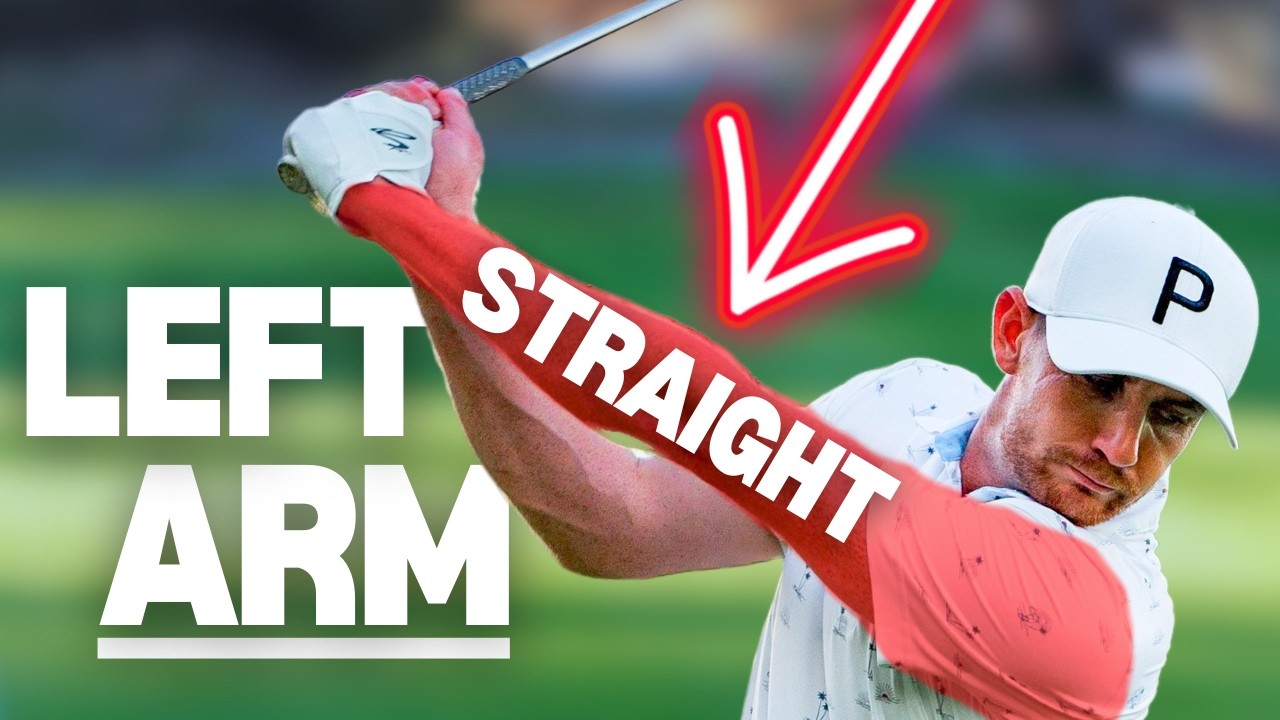
Keep the left arm straight (right handed players) during the backswing and go back as far as you can. Your tempo is dictated really by your personality, some people are naturally slow movers so will ha  More >>
Courtesy: 4moles.com
Get more Power - Anchor your right foot
One key to hitting more powerful golf shots is keeping your body behind the ball before impact. A premature lifting of the right foot during the downswing causes golfers to shift too much of their weig  More >>
Courtesy: Art Sellinger
Don't freeze up the Backswing
Once you have gone through your pre-shot routine and assumed your stance, don't stop - as so many golfers do - by grounding the club behind the ball and going into a trance that leads to muscle tension  More >>
Courtesy: Chris Meadows
How to play the Fade Shot
Remember that a fade will cost you distance, especially if you try to add more height to the shot. So take that into consideration when visualizing what you are about to do and selecting your club. In  More >>
Courtesy: Chris Meadows
Curing the Slice
Hit some shots from a sidehill lie, with the ball several inches above your feet. This can help you to produce a better swing plane and promotes an in-to-out swingpath.  More >>
Courtesy: Chris Meadows
Choosing the right putter
Just like any other club in your bag, a putter also has a lie angle, and having the correct one is vital to playing successfully on the greens. Choose a lie angle that sets your eyes over the ball when  More >>
Courtesy: Chris Meadows
Getting out of fairway bunkers
Since you can never ground a club in a bunker, it's a good idea to practice the technique you will use for this shot - and you do not even have to be in a bunker to do so. At the driving range, simply  More >>
Courtesy: Chris Meadows
Playing from a divot
Remember that to get out of a divot, you have to take another divot. Many beginners and even some intermediate players often do not take divots after the ball because they lack confidence and have neve  More >>
Courtesy: 4moles.com
Better downswing against a slice
Most people with a slice problem cut across the ball on the downswing. To learn the correct path for the clubhead to follow, think of a rope attached to a tree above you. From the top of the backswing,  More >>
Courtesy: 4moles.com
Using Visual Aids to Line Up a Putt
What are the professionals doing when they mark their ball, crouch down and then seem to fiddle with the ball before placing it back on the green? Many times, they're trying to line up the manufacturer  More >>
Courtesy: Chris Meadows
Improve Your Balance and Game
When you're having problems making good contact, it's often because you start to sway, lose balance, and stop turning. One of the best drills to help cure this problem is to hit balls with your feet ab  More >>
Courtesy: 4moles.com
Getting more distance
The key to hitting a golf ball a long way is minimizing your hip turn and maximizing your shoulder turn. The easiest way to accomplish this is to make sure that your left knee doesn't slide to the righ  More >>
Courtesy: Frank J. Peter
Stroke the Ball, Don't Hit It
Often the difference between a strong, powerful swing and a misguided hack is the tendency to hit, rather than stroke, the ball. The difference can be seen when examining a short putt, when it is easy  More >>
Courtesy: Tom Ward, PGA Tour Instructor
How to Stop “Looking Up”
Many beginning golfers have the “Look Up” problem. They are so anxious to see where the ball might go that they "look before they leap" and miss the ball completely. In some groups, if you do this  More >>
Courtesy: 4moles.com
Stay Flexible on Tee and Fairway
One of the worst things you can do to your golf game is to tighten up or get too tense when teeing off, or when you're on the fairway or green. Instructors have a cure for this; it's a drill called “  More >>
Courtesy: 4moles.com
Etiquette on the Green.
There are certain rules you are expected to follow when your ball is on or near the green. Suppose one golfer in a Par-3 hole hits his ball into a sandtrap not far from the pin. Another player lands h  More >>
Courtesy: 4moles.com
Putting - 'Hit and Hold'. Click on more to view this tip.
The most common cause for missed putts is movement. Golfers change their original posture in an attempt to see where the ball is going. This is suicide. At practice be aware of your posture as you line  More >>
Courtesy: 4moles.com
IMPROVE SAND PLAY: The best way to find ones way out of a sand-trap is to hit the ball with the kind of force you would use to otherwise roll it from that position to near the pin. Technically, what i  More >>
Courtesy: 4moles.com
Playing in the 'NOW' is one sure-shot way to regroup. Living in the past has helped no one and fear of repeating previous mistakes often leads to a complete black-out of the present and of the 'NOW' si  More >>
Courtesy: 4moles.com
The grip is essential to get your arms and the club working t
The grip is essential to get your arms and the club working together. The swing is entirely dependent on this. There should be no tension while gripping the club. While both overlapping and interlockin  More >>
Courtesy: 4moles.com