Coming Soon...
OK
Something went wrong!
Please try again later.
EXPANDING


Golfer’s Elbow, medically known as medial epicondylitis, is a common overuse injury that affects the tendons on the inner side of the elbow. It results from repetitive stress on the forearm muscles, leading to inflammation, pain, and reduced grip strength. While this condition is often associated with golf, it can also affect individuals engaged in activities that require repetitive wrist and arm movements, such as tennis, weightlifting, and even certain occupational tasks.
This article explores the causes, symptoms, and effective treatment strategies for Golfer’s Elbow, incorporating insights from sports medicine professionals and physiotherapists.
Golfer’s Elbow is primarily caused by repetitive stress and strain on the tendons that attach to the medial epicondyle, the bony bump on the inner side of the elbow. The condition can develop due to:
According to research published in the British Journal of Sports Medicine, Golfer’s Elbow is more common in individuals aged 30 to 60 who engage in repetitive arm movements without sufficient conditioning.
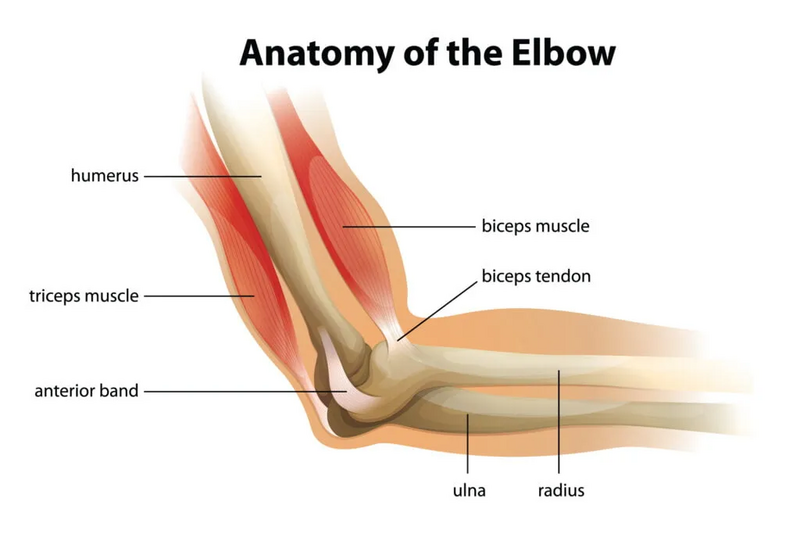
Recognizing the early signs of Golfer’s Elbow is crucial for preventing long-term complications. Common symptoms include:
A study from the American Journal of Sports Medicine highlights that untreated Golfer’s Elbow can lead to chronic tendon degeneration, increasing the risk of long-term dysfunction.
Golfer’s elbow and tennis elbow are two conditions resulting from injury or wear and tear to your elbow, but they are distinctly different.
Golfer’s elbow is pain and inflammation on the inside of the elbow (medial epicondylitis). Tennis elbow is pain and inflammation on the outside of the elbow (lateral epicondylitis.)
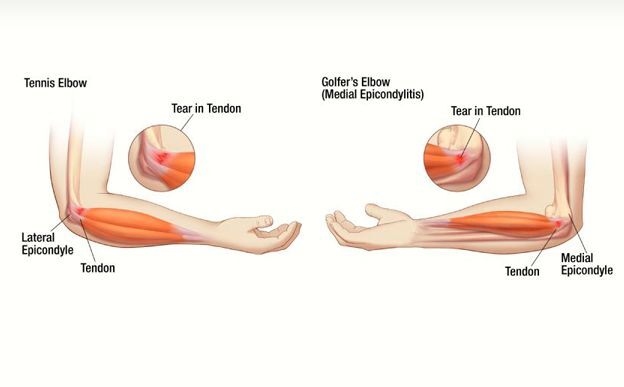
Anyone can have either or both of these conditions at any time, regardless of whether they play sports or not and regardless of what sport they play. It is also possible to have these injuries simultaneously.
The first step in managing Golfer’s Elbow is reducing the strain on the affected tendons. Medical professionals recommend temporarily avoiding activities that exacerbate the pain while maintaining overall fitness through low-impact exercises.
Applying an ice pack to the affected area for 15-20 minutes, three to four times a day, can help reduce inflammation. Nonsteroidal anti-inflammatory drugs (NSAIDs), such as ibuprofen, may also provide short-term relief, but should be used under medical supervision.
A structured rehabilitation program focusing on wrist flexor and extensor strengthening can accelerate recovery. Some effective exercises include:
A study published in Physical Therapy in Sport found that eccentric exercises significantly improve tendon healing and reduce pain in individuals with medial epicondylitis.
Golf professionals and sports physiotherapists suggest that improper swing mechanics contribute to excess strain on the elbow. A biomechanical assessment with a golf instructor can help correct:
Wearing an elbow brace or forearm strap can help offload stress from the tendons and provide additional support during the recovery process. A review in the Journal of Orthopaedic & Sports Physical Therapy suggests that bracing can help reduce pain and improve function in the short term.
If symptoms persist for more than a few weeks despite conservative treatment, medical intervention may be required. Treatment options include:
According to the American Academy of Orthopaedic Surgeons, over 90% of patients with Golfer’s Elbow recover with non-surgical treatment.
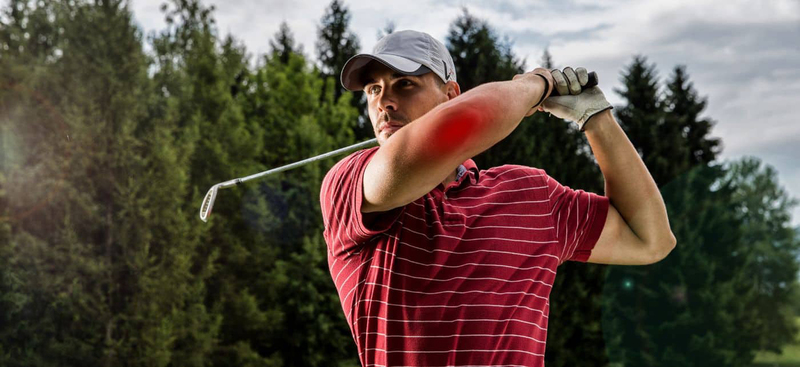
(Credit- occ.com)
Regular forearm and wrist strengthening exercises can reduce the likelihood of recurrence.
Incorporating dynamic warm-ups before playing and post-game stretching can help maintain tendon flexibility.
Ensuring clubs are properly fitted and refining swing mechanics can minimize unnecessary strain on the elbow.
Gradually increasing the intensity of practice sessions can prevent overuse injuries.
Golfer’s Elbow is a treatable condition that, with proper care, does not have to limit one’s ability to play golf or engage in other activities. By understanding its causes, recognizing early symptoms, and implementing evidence-based treatment strategies, individuals can recover effectively and return to the game stronger.
For golfers and athletes prone to repetitive stress injuries, preventive measures such as strength training, technique improvement, and proper warm-ups are key to long-term joint health. If symptoms persist, consulting a sports medicine specialist or physiotherapist is essential for personalized treatment.
Would you like to see more golf-related injury prevention guides? Let us know in the comments!


4moles Editorial | May 26, 2026
GRPL – The Royal Trial of India brings India’s first city-based Pro-Am golf league with rivalries, luxury experiences & live entertainment. Read More

4moles Editorial | May 18, 2026
Aaron Rai survived major championship chaos at Aronimink, defeated golf’s biggest names, won USD 3.6 million, and became the first player of Indian descent to capture a men’s major title. Read More

4moles Editorial | May 15, 2026
Spend 3 unforgettable days from 29th-31st May 2026 at the GRPL Kolar Leg featuring golf, cocktails, luxury stay, and entertainment. Read More

4moles Editorial | May 11, 2026
A new era of sports ownership may be entering golf as Delhi Royals brings visibility, culture, identity and modern franchise energy to the game. Read More

4moles Editorial | May 04, 2026
“The Royal Trial of India” signals a bold new era for Indian golf, introducing India’s first structured, city-based franchise league built for scale, visibility, and long-term value. Read More

4moles Editorial | April 09, 2026
Celebrate Golfers Day with Golfing Ganesha at INR 7,200 (MRP INR 12,000) plus flat 50% off on golf shorts and trousers. Limited-time offer. Shop now. Read More

Asian Tour | April 06, 2026
One of the rare Indian top-5 finishes at an elite International Series event on the Asian Tour in recent years. Read More

4moles Editorial | March 31, 2026
Tiger Woods’ past driving incidents resurface as he holds key PGA Tour leadership roles shaping golf’s future. Read More